
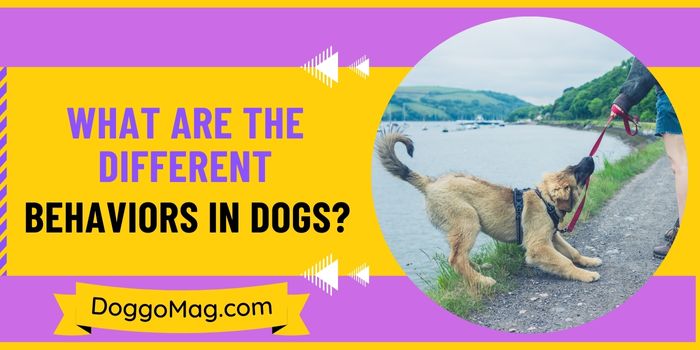
What Are The Different Behaviors In Dogs? – 7 Types

Last Updated/Info Checked on May 9, 2023 by Linda Michaels
Dogs exhibit different behaviors, and a few of them are digging, chewing, playing with toys, barking, chasing, nipping, and fetching.
These show different aspects of a dog’s reaction to its surroundings. They have a meaning that you need to understand to fulfill your dog’s needs in a better way.
After all, a better-understood dog is a happy dog.
7 Behaviors That Are Normal For A Dog
Go down the list to know more about “What Are The Different Behaviors In Dogs“.
1. Digging
Dogs dig for a number of reasons. The foremost is hiding their stuff. However, on a hot day, they may dig to lower their temperatures from the cool soil underneath.
Moreover, they may dig to hide from wind or other environmental aspects. Some dogs develop a bad digging habit by leaving pits open in their owner’s lawn.
That has to be corrected with proper training by rooting out the reason why they do that.
2. Chewing
Your pet may chew out of boredom or excitement. Both these extremes are found in households where dogs reign.
However, chewing may also be a result of dental pain experienced because of the incoming teeth. Keep an eye on their dental health. As they don’t speak, they convey their experience through chewing.
Here too, you should look out for excessive chewing. You may come home to a chewed newspaper lying around, toilet paper, or even your favorite sofa.
Among signs such as pooping and breaking things, this may mean that your pet’s experiencing separation anxiety.
3. Playing with toys
Dogs have two modes: play and eat. The former arises from the unbound capacity of loving you and the latter, of course, needs to refill its energy reserves.
Playing also keeps them mentally and physically sane because dogs are active animals. They are meant to move around, save for a few toy breeds that do not require hours of exercise or play, such as the French Bulldogs.
Those that don’t get enough playtime may slip into depression or adopt other ways to release that energy. You may see them ripping through your favorite furniture.
4. Barking
Barking is how a dog communicates. It alerts you against a possible threat or a stranger lurking behind the windows. Sometimes the barking is a reply to another dog tearing away its lungs. Other times, it may get out of your hand.
That’s when you bring in all the methods to teach the dog to stop barking unnecessarily. Trainers dig into the reasons and then use training methods with anti-bark collars.
5. Chasing
Some breeds were meant to be chasers. They are herders, mostly. They love chasing and “herding”, possibly everything that comes their way.
One such example is Border Collies. They may chase around small animals, objects, and even children to “herd” them.
While this is a natural behavioral aspect, keeping it checked is important for obvious reasons. You don’t want them to trip over others.
6. Nipping
Dogs nip to communicate and show love. But nipping could easily get out of their hands. They are small bites that may become uncomfortable for most.
Herding dogs also nip at the heels of people to herd them as they do to the hooves of sheep.
Excessive nipping may result in discomfort all around your house. If your dog’s already doing it, make sure you’re giving it enough attention because they can develop this behavior to turn your attention toward them.
7. Fetching
Hounds are adept at fetching, but normally, all dog breeds could be taught to fetch what you throw. They derive this behavior from their ancestors, who were domesticated to help us fetch small hunted animals or general things.
Refrain from over-training your dog to fetch because sometimes that can backfire when the dog goes far and beyond to fetch things you don’t want.
What Are The Different Behaviors In Dogs? – Wrapping Up
Dogs show many behaviors to communicate with you and their fellows. There’s always a safe threshold beyond which any behavior could be called unhealthy.
That’s when you have to intervene with obedience training or ones that help you control their unwanted transgressions.
You may also have to use tools to get them done. Some of the useful ones are training collars. They help shorten the training time and also increase focus!


